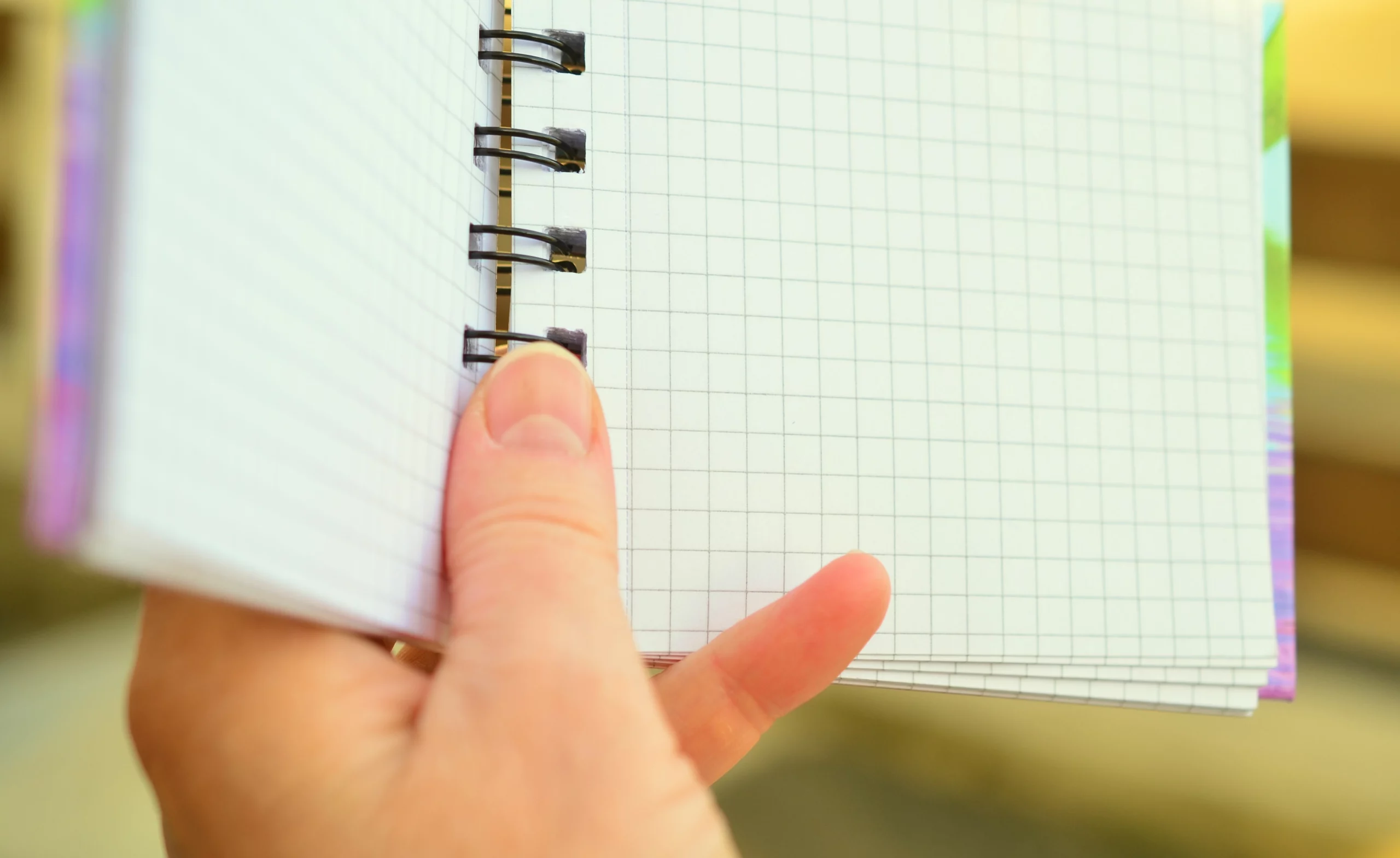
Why a notebook can be more than paper – and what writing does to your mind
„I have so many thoughts in my head, but no order.“ – „In the evening everything circles and I don’t know where to start.“
Do you know this? Then one of the oldest and cheapest methods of self-reflection might be something for you: journaling. A pen, a sheet of paper, a few minutes – that’s all it takes. But what does it really do? Let’s look at it honestly.
1. What the research says – without exaggeration
The best-known trail was laid by the psychologist James Pennebaker from 1986 onwards with what he called expressive writing: writing for 15 to 20 minutes on three to four days about a distressing experience – including the feelings that go with it. An early summary from 1998 found considerable effects; across more than a hundred later studies a more realistic picture emerges: the effect is real, but modest.
And that is exactly how you should approach it. Journaling is no miracle cure that transforms your mind. It’s a solid tool with a small but genuine benefit – and that’s more than many trends can claim for themselves. Interestingly, a meta-analysis of around 20 randomised studies with people who had a diagnosed mental illness found a significant, moderate benefit. So writing can support you even when you’re not doing well – as a supplement, not a substitute for professional help.
A second line of research comes from Robert Emmons and Michael McCullough (2003): people who regularly wrote down what they were grateful for reported more optimism, more life satisfaction and fewer physical complaints than a comparison group that wrote about annoyances. Here too, later meta-analyses show small to moderate effects – no fireworks, but a reliable glow.
2. Why writing works at all
Perhaps the most interesting finding from Pennebaker’s research is this: what matters is not that you write but how.
- Emotional engagement: People who only mechanically dump facts („then this happened, then that“) barely benefit. It becomes effective when you engage with the feelings that belong to the events.
- Making meaning: Writing helps when the tangle of thoughts gradually becomes a story – when you recognise connections, shift perspectives, give what happened a place.
Writing forces you to turn the diffuse noise in your head into sentences. A sentence has a beginning and an end – a rumination carousel doesn’t. That is exactly the power I also describe in the article on the art of self-reflection: creating distance without suppressing.
An honest note: someone writing about a severe trauma may experience a lower mood in the short term. That’s normal – but with deep wounds, journaling is no substitute for therapy. In that case, get professional support.
3. Four methods to try
Journaling isn’t a rigid format. Here are four proven variants with a mini guide:
- Expressive writing: Take 15 to 20 minutes on three to four consecutive days. Write about something that occupies or burdens you – with no regard for spelling or style. Important: include feelings and thoughts, not just facts.
- Gratitude list: Note down regularly – say once a week or every evening – three to five things you’re grateful for. The more concrete the better: not „my family“, but „my daughter’s laughter at dinner“.
- Morning pages: Write three pages right after getting up – unfiltered, without a topic, without ambition. A kind of mental shake-out before the day begins.
- Thought record: A classic from cognitive behavioural therapy. Note down in three columns: situation – automatic thought – feeling. And then the key question: what speaks for this thought, what against it? That’s how you get on the track of burdensome thinking patterns.
🟢 My tip for starting: Choose one method, not four. Put the notebook in a fixed place – next to the coffee machine, on the bedside table. And give yourself two weeks before you judge.
4. Handwriting or keyboard?
You might be wondering: does it really have to be pen and paper? The honest answer: there’s no scientific evidence that handwriting works better than typing for journaling. If you prefer to type, type.
And yet paper has something going for it – as a ritual. A notebook doesn’t ping, it doesn’t lure you with the next tab, it belongs to this one moment only. The slowness of the hand can help you stay with a thought instead of jumping to the next one. That’s not a proven advantage for the brain – but it is a noticeable advantage for attention. Choose the medium you’ll actually stick with.
Conclusion
Journaling is a small tool with an honest effect: expressive writing and gratitude journaling show real, if modest, effects in the research. What matters isn’t the perfect notebook but your emotional engagement – and the willingness to give what you’ve experienced meaning as you write. If you’d like to understand more deeply why looking inward is so valuable, the article What is self-reflection? covers the basics.
Would you like to deepen your self-reflection beyond the page?
In coaching your notes become a conversation – with someone who asks, reflects back and moves you forward where on your own you write in circles.
Your progress is my joy.